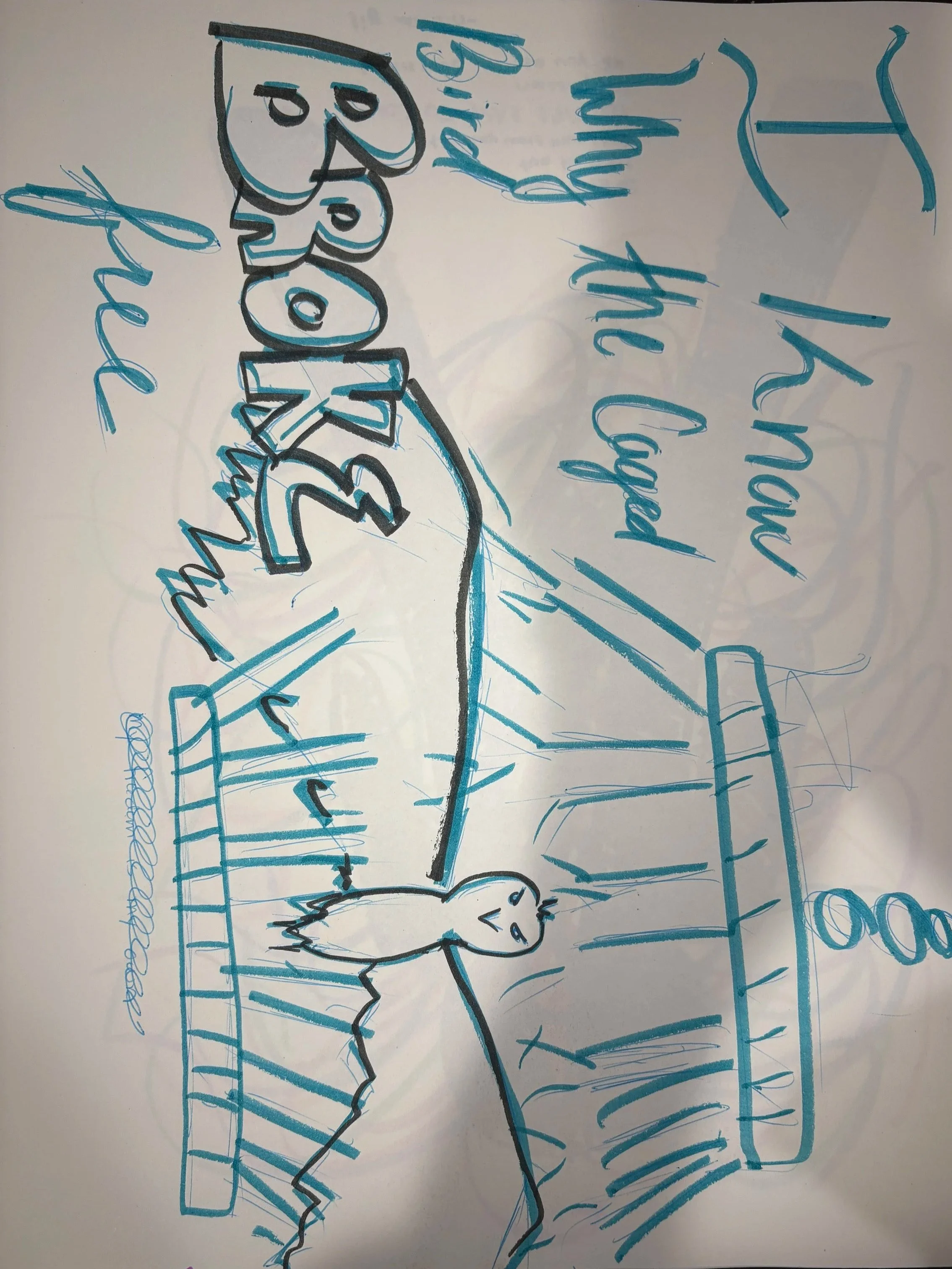
I was always insecure about not being enough while being deeply afraid of being too much— a burden.
That tension didn’t exist in school. I always happened to tiptoe the line just right. How to be kind without being a suck up, smart without drawing attention, loved by teachers without being hated by students. I knew how to answer all the questions and master the concepts, how to structure an argument and persuade others into agreement. In retrospect, that was—is—my magic, but I wasn’t using it for the good of all back then. I was using all my beautiful, bright, birthright magic for safety in invisibility.
Academia liked thinkers and writers, and I like thinking and writing and collaboration over complex ideas. Perfect. A place I could fit in as myself without worrying about crossing any (arbitrary) lines because I naturally showed up within the acceptable parameters.
When I received my acceptance into my doctoral program, it felt like a relief. I could remove the straight jacket I had to exist in while working in HR, plastic smiles and enforcing policies I didn’t believe in, to frolic through the quads in jeans and a cardigan. To be free to express and pursue my own thoughts and ideas.
I didn’t realize I was trading one cage for another.
Corporate culture had handbooks and policies to explicitly define the lines people can color within. No tattoos, no nose piercings, no brightly colored nails, no open-toed shoes, no discussion of unions. Simple, rigid, to the point.
Academia asked me to change behind polite smiles and well-meaning advice.
I went to grad school to study joy and resilience among Black queer youth within their families and communities. A committee member said she didn’t understand my definition of community, so I distilled it. Community can be considered relational (people who share similar values, beliefs, identities) or geographic (people who live in same geographic/local area). I would not describe community to my family this way, but I rationalized that this is science. We must be clear and specific in the operationalization of our constructs.
I wanted to do interviews with community members, host focus groups and photovoice projects to understand the lives of queer Black folks in a way that honors our pain without erasing our strengths and joy and—
My advisor said the department doesn’t really support qualitative work and I should do a survey instead. I wanted to graduate, believed I needed the degree for approval, so I acquiesced. Instead of words, I described people and their lives and emotions as numbers. Data points. Distant constructs, not living breathing beings.
And my committee loved it. Conference presentations were accepted, papers were published, awards were given, Masters’ degree conferred. From Black queer youth’s joy and resistance to “a pathway analysis on how involvement in racial-ethnic LGBTQ communities influences Black LGBTQ young adults’ intersectional activism.”
. . .
Academia never asked me to change.
The walls just crept in closer and closer, until I didn’t recognize the words coming out of my mouth.